Oct 2025 - Feb 2026
Trust & Safety
Strategic App design
B2C
Whoscall: engaging users in their own protection
A concept project proposing features to double CLV for a mature anti-scam app
My role
Product design lead
Own the product and design direction in a team of 6 designers
Deliverables
Prototype and validate a design concept to double CLV and improve key product metrics
Challenges
Take leadership and ownership of the product strategy
Develope a design solution for a mature mobile app
Product strategy
Applying a Lean UX framework, the project was structured across 3 phases of implementation to reach the primary business goal of 2× CLV and secondary metrics, grounded in research and tested against real users at every stage.
Short-term
(3–6 months)
Launch AI verification agent
Make personal reporting feedback visible
Target: growth in MAU, report rate, ad revenue
Mid-term
(6–9 months)
Launch Trust Circle feature
Trust Circle onboarding iteration& promotion
Target: 10× growth in the "check & report" loop
Long-term
(9–12 months)
Expand Trust Circle links
Optimise data visualisation of reporting feedback
Target: 2× LTV, growth in IAP conversion & renewal rate
Project process
1
Market, product and competitor research
2
UX research and synthesis
3
Ideation and prototyping
4
Usability testing and iteration
Market, product and competitor research
In 2025, despite a decreasing trend, scam-related financial losses in Taiwan still reached €2.57 billion across 176,242 reported cases. This reveals that digital fraud remains a significant economic threat. As sophisticated digital scams continue to evolve, traditional caller ID detection alone can no longer satisfy the needs of the anti-scam app market. Whoscall has been facing the challenge of repositioning itself from a caller detection tool to a trust-tech platform.
An existing business problem
At the end of 2025, we were given a business problem to solve: “How might we create a personalised experience or information module that helps users genuinely feel how they are being protected and builds a lasting sense of achievement that keeps them engaged with the product long-term?”
Starting with an analysis of the business problem, we deconstructed it into 3 parts:
Personalisation
How might we create a personalised experience or information module?
Visibility of protection
How might we help users genuinely feel how they are being protected?
Long-term engagement through achievement
How might we keep users engaged through buiding achievement meaningful for them?
These initial directions were later refined through user research.
To better understand the context of the business problem and challenges, a complete desktop research was conducted through these channels:
Whoscall website, content marketing, and relevant news and reports
AI-assisted research (Perplexity, Gemini Deep Research)
User feedback on Whoscall and competitors (Reddit and app stores)
User flow research on main competitors
Whoscall product managers
First differentiation of Whoscall users
Through conversations with Whoscall's product managers and initial survey findings, we identified that Whoscall is a mature product navigating a strategic shift and repositioning itself as a trust-tech product against evolving digital scams.
Despite the ongoing shift, Whoscall remained the most scam app users (70%) turned to for fraud and scam protection. It has quietly secured users' trust for over a decade so that even long-term users felt little motivation to explore additional protective features. This context shaped how we approached understanding Whoscall's two key user segments:
Long-term users
2-10+ year users, with strong loyalty
Not well-informed about new features
Satisfied with basic fraud/scam number detection
Concerned about privacy
Short-term users
Evaluate Whoscall alongside competing products
Easy to find apps to replace Whoscall
No strong motivation to change their habits in order to detect fraud/scam
Technical constraints and UX
While we digged into the anti-fraud/scam process, we discovered that differences in Android and iOS system API openness created inconsistencies in the product experience across platforms, which became a valuable reference for ideation later.
UX research and synthesis
Identify Whoscall users
The goal of this phase was to understand who Whoscall's users really are. Surveys and interviews were conducted to map user journeys, define user types and personas, and identify key insights and pain points.
A qualitative research method was adopted due to the limits of resources, while a small scale of quantitative numbers were still used to measure and compare user preferences.
Initially, it was assumed that reporting suspicious numbers or social media accounts could be linked to long-term achievements. In the first round of surveys and interviews, we focused on the relationship between the motivation to report and the sense of achievement, as well as the behaviour differences between active and passive users.
In the 43 responses, a few types of users were identified based on their activeness of reporting scam numbers/cases. 6 respondents were selected for interviews. In general, it was clear that active and passive users reflected 2 different types of users. The interviewees were mapped across two axes: long-term usage intent and reporting motivation, revealing that users in the high-intent quadrant shared a common drive: protecting the people close to them.
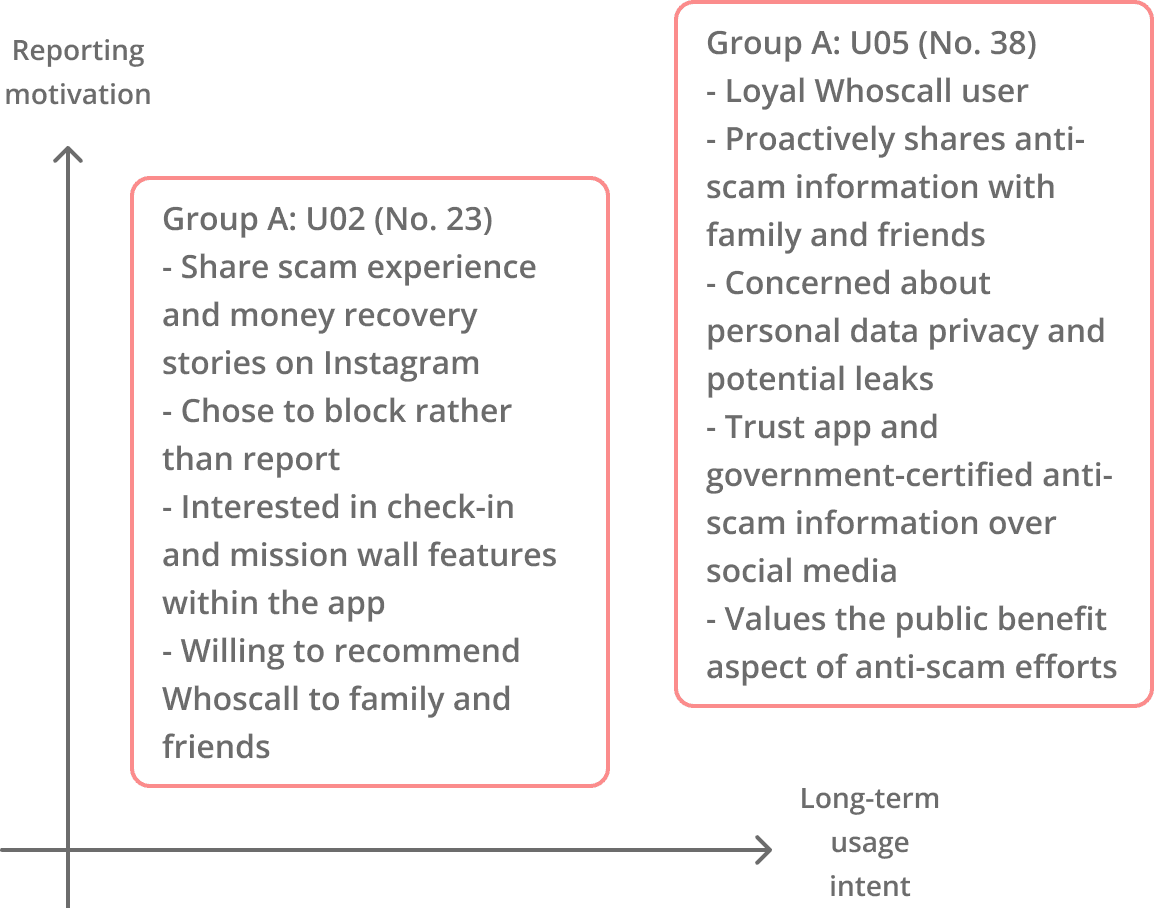
User Category Map (view full image)
Target specific user segment and journey
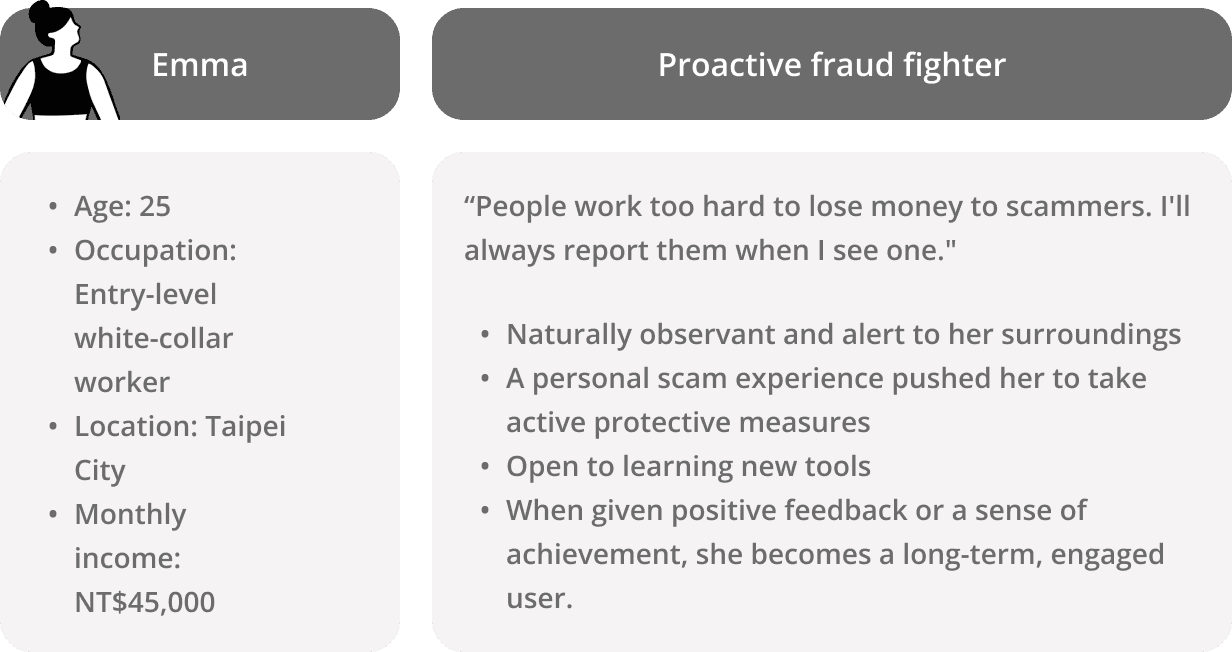
We focused on Group A users in the high-intent quadrant, long-term users with strong motivation to protect their close circle, as they represented the highest potential for engagement and long-term value.
The user journey map revealed that emotions were lowest during the detection and reporting phases, likely driven by scattered information and the lack of timely response from authorities and Whoscall.
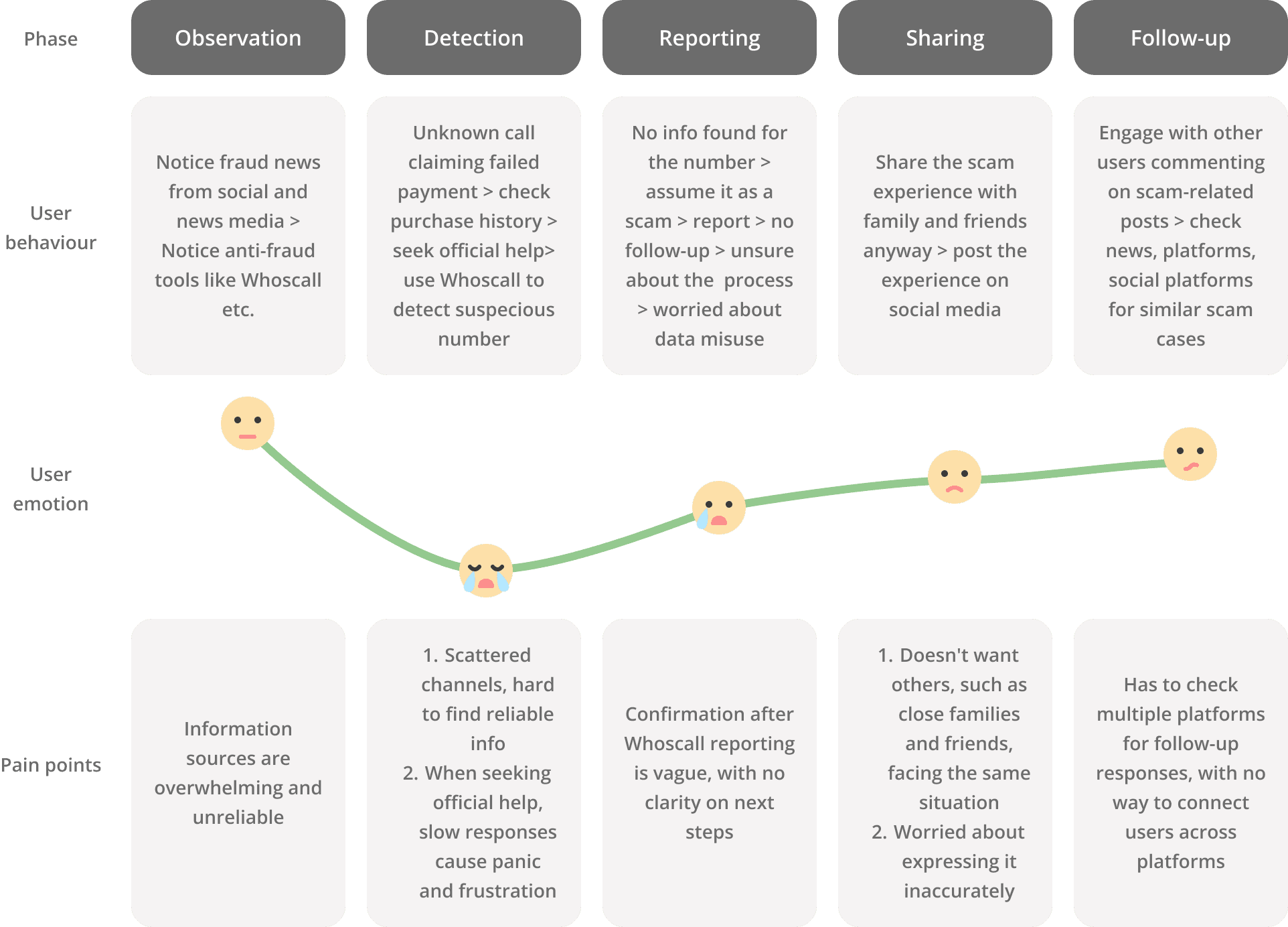
However, the team soon struggled to map contextual solutions, as the assumption and survey results did not reflect how users valued the app as a whole.
Shift focus areas in the second round survey
To deepen our understanding of how users value current and potential features, I drove the team to run a second round of surveys with added quantitative questions to assess product positioning and user opinions. We also decided to dig deeper into a specific insight that had emerged: users want to protect their close family members and friends.
The focus areas were shifted to:
Current detection feature satisfaction
Achievement and reward system
Interest in group fraud prevention
Anti-fraud knowledge and education
Feature expectations and willingness to pay
The second round of surveys received 127 responses and confirmed that users placed high value on proactive protection and community-based trust features, and that a segment of long-term active users (55%) expressed willingness to pay for enhanced protection for their close circle.
While 45.7% has officially reported scams or warned of close circle, 74% users are willing to report scams in app provided they can get feedback such as how many people they helped or wheather the number has been reported. The noticeable nearly 30% gap is one of the factors that we could work on to form the retention. It indicated that retention was not a motivation problem. Users wanted to report, but the app was not giving them enough reason to follow through.
Ideation and prototyping
Refine HMW questions
Returning to the core business problems, we refined the HMW questions using insights drawn from research, shifting the perspective from business goals to user needs.
Personalisation
How might we ease users' anxiety and insecurity by providing timely information through a personalised module?
Visibility of protection
How might we create connections between users and their close circle within the app to keep fraud prevention updated in time?
Long-term engagement through achievement
How might we provide information or mechanisms that give users a reason to keep coming back?
In the brainstorming and ideation phase, we assessed solutions using impact, feasibility and scope as key metrics. For impact, we referenced user pain points and survey data to balance business goals with user needs. For a mature product with an established user base, even secondary preferences carried weight. 29.9% of users expected regular reporting feedback, and 28.3% wanted to warn their close circle through the app. These signals were strong enough to justify new features without disrupting the core experience. Both features scored high in impact during prioritisation and were carried forward alongside the AI agent to form the product strategy.
From AI-assisted analysis output to active AI detection agent
Since most user anxiety stems from delayed verification and response, an AI agent is well-positioned to ease that tension, providing not only fraud risk disclosure but also guidance on next steps. Whoscall's existing caller ID database gives the agent a distinct advantage over general-purpose AI tools.
Create micro-community based fraud prevention
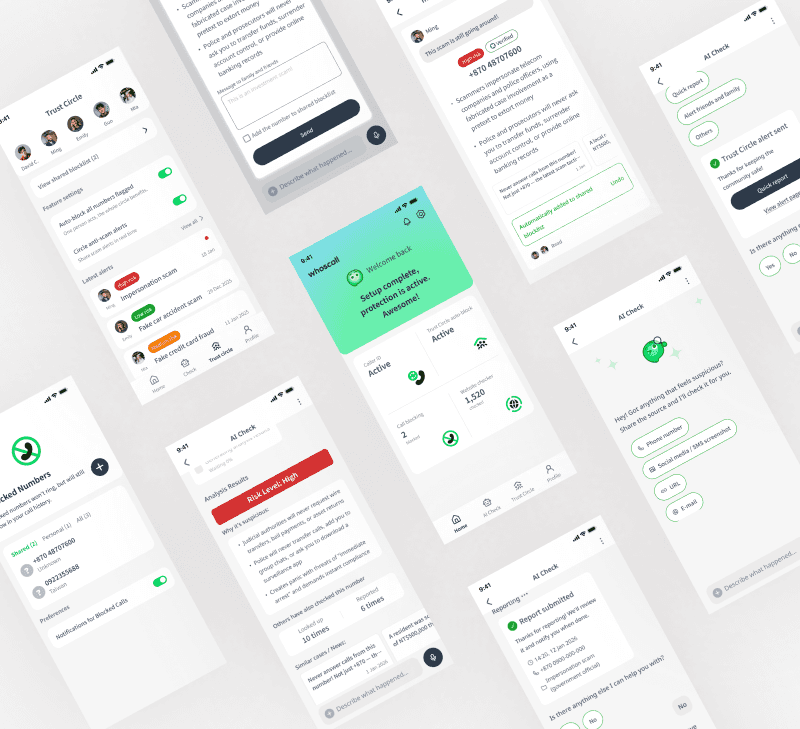
Both long-term and short-term users expressed concern about whether their family or close circle might be affected by fraud and suffer financial loss. Building on the existing family plan, the proposed solution evolves it from a bundled group subscription to a connected micro-community, allowing members to send alerts to each other and maintain a shared group blocklist.
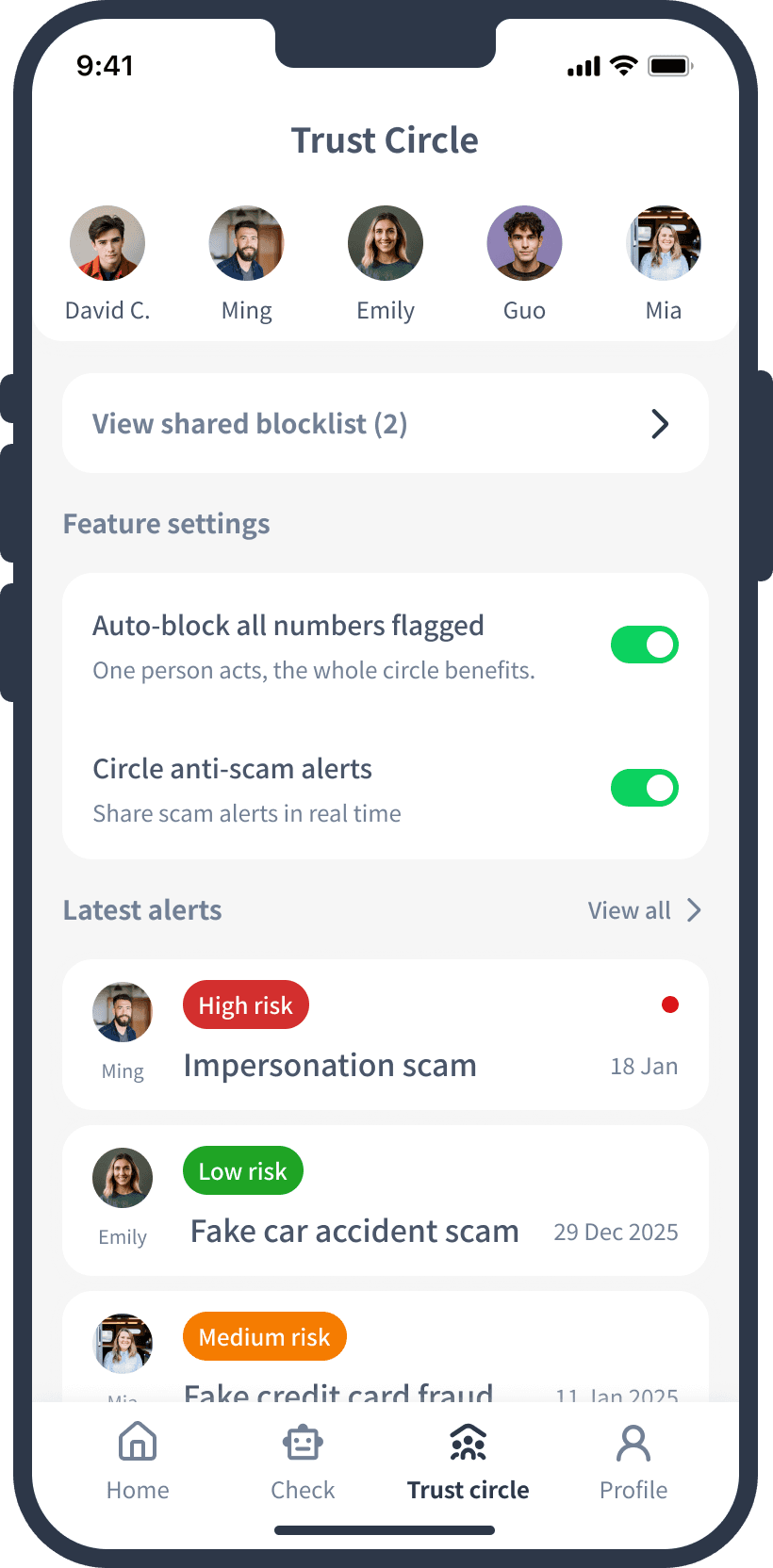
Trust Circle: member alerts and shared blocklist settings
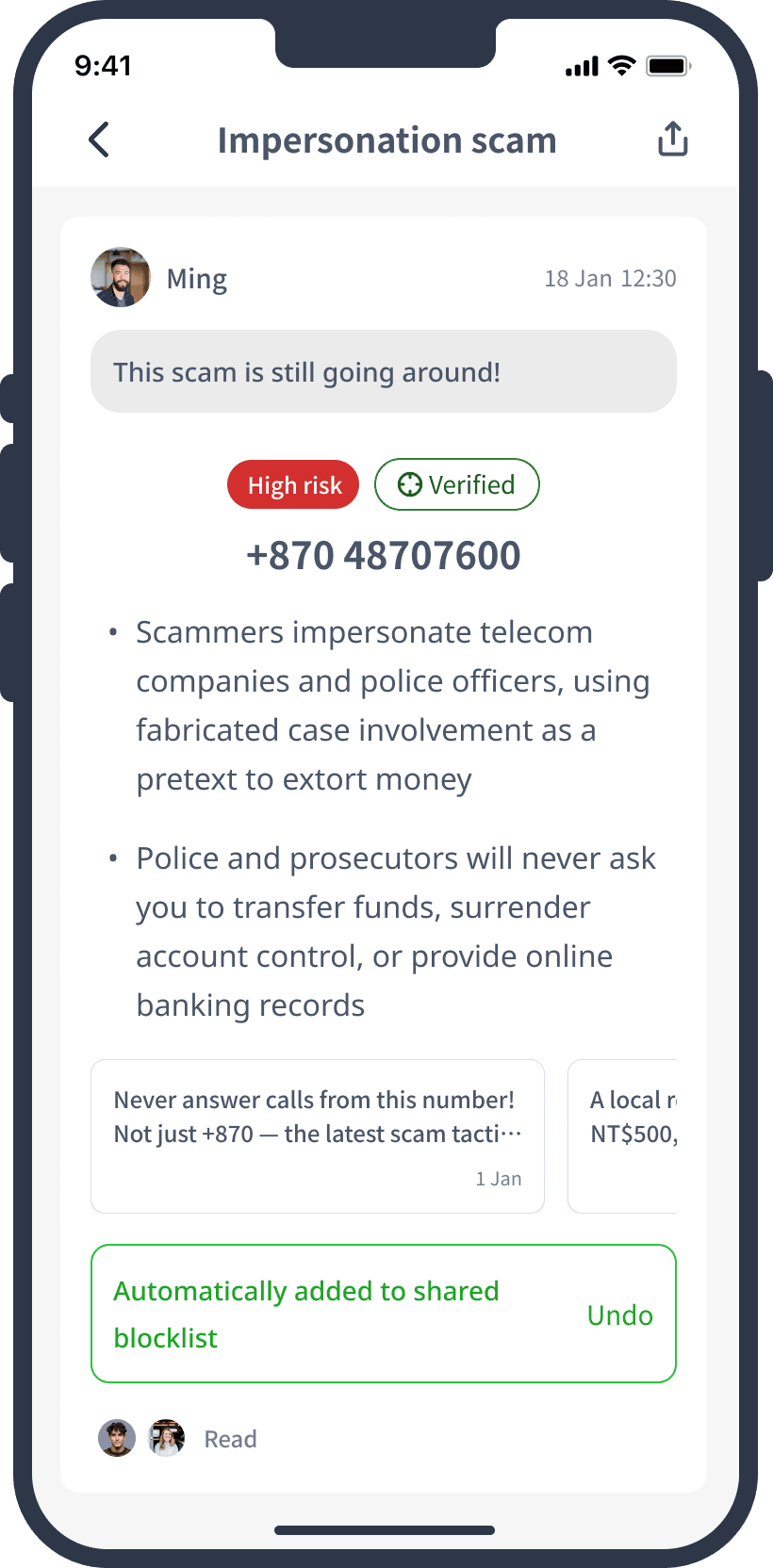
Alert detail: verified scam information shared by a circle member
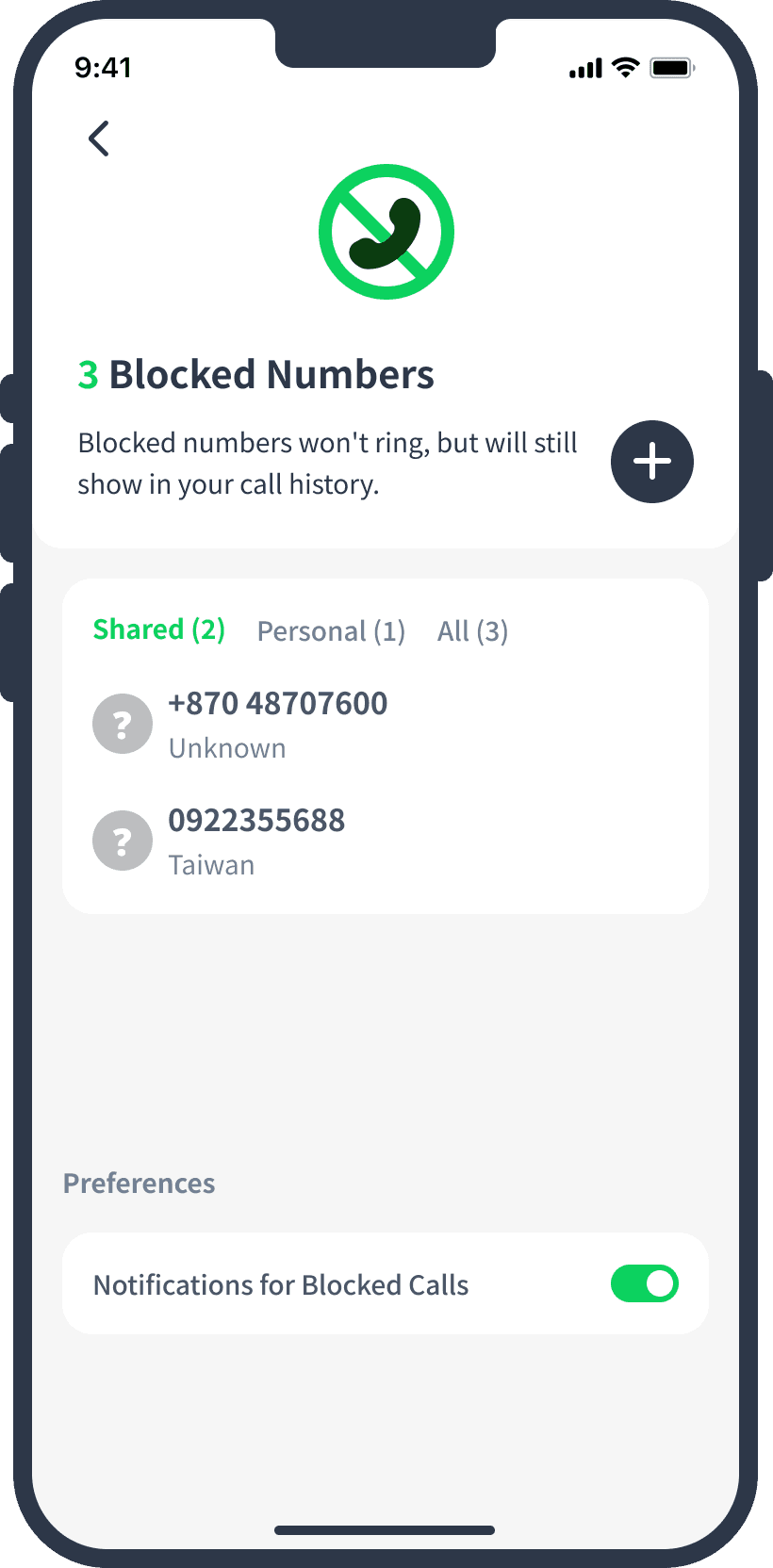
Shared blocklist: numbers blocked across the whole circle
Make personal reporting feedback visible
The current reporting screen only reveals milestones tied to accumulated report counts. Since we found that proactive users care more about meaningful outcomes than gamification rewards, the solution refocuses on showing the actual impact of each report, helping users feel they are a genuine part of the anti-fraud community.
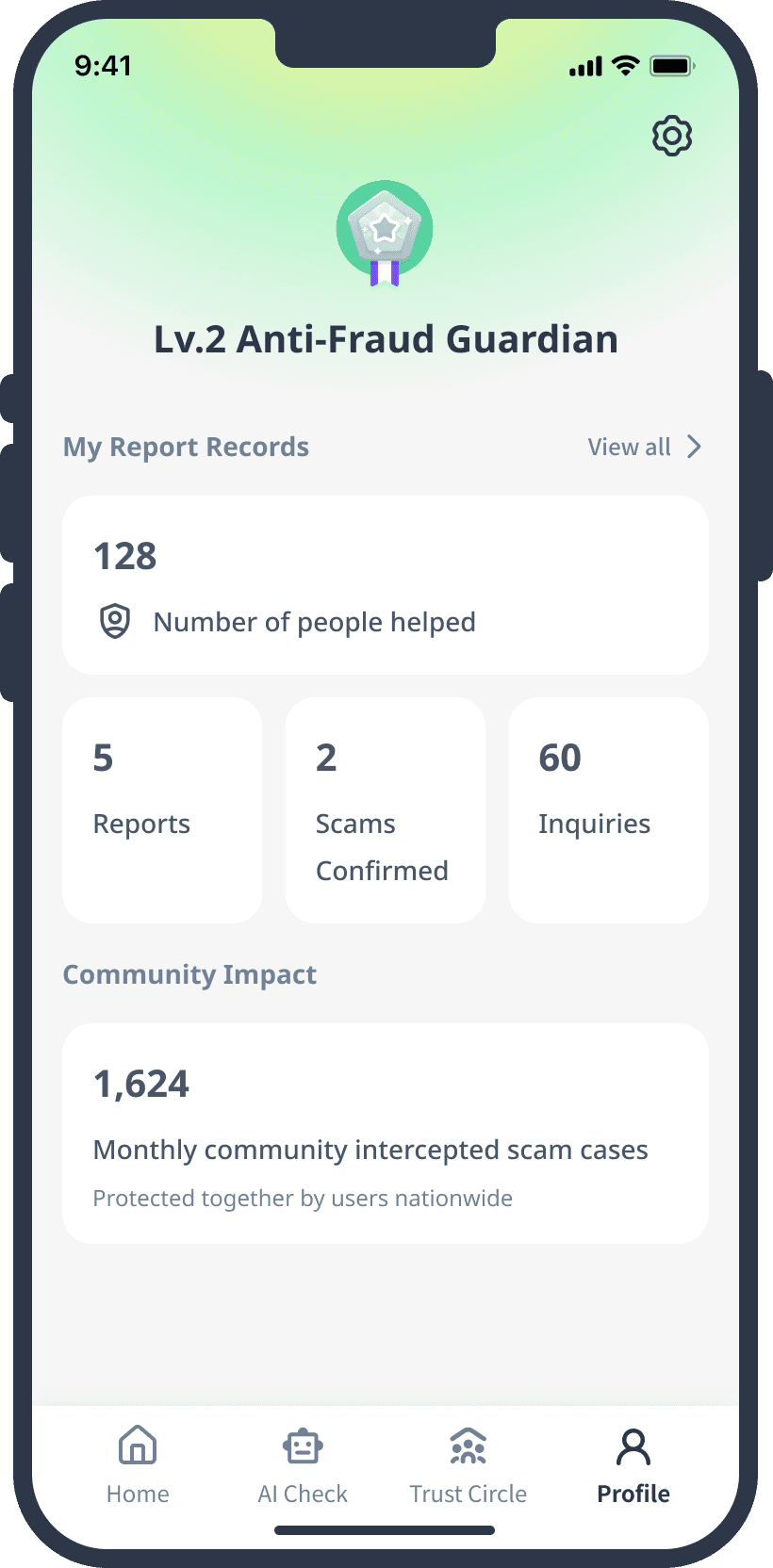
Profile: make meaningful numbers visible to users
Testing and iteration
Make design validated
6 screened users of anti-scam apps who attended the second-round survey were invited to validate the proposed solutions through 2 tasks:
Task A:
Evaluate whether the AI agent flow improves the user experience.
Task B:
Assess whether users see value in a network protection feature within the app.
A qualitative usability test method was then adopted. We collected user insights through interviews and the feedback was analysed with standard usability metrics: effectiveness, efficiency, and satisfaction.
Iterate solutions
Three priorities were identified from the usability test.
Shared blocklist lacking notification
Affecting the core Trust Circle feature and had a clear design goal to fix
Trust Circle copy confusing the sharing function
Affecting the recognition of the specific feature
Users wanting to see who blocked and why in the shared blocklist
Linked to key product principle “the visibility of protection”
Based on the findings, the shared blocklist was updated to include sender identity and block reason, and the Trust Circle copy was revised to more clearly communicate the alert sharing function.
Shape product strategy
Each proposed feature was mapped to the strategic directions identified in research, with corresponding business metrics to measure success.
Personalisation
Visibility of protection
Long-term engagement
Launch AI verification agent
Make personal reporting feedback visible
Launch Trust Circle feature
Trust Circle onboarding iteration & promotion
Expand Trust Circle links
Optimise data visualisation of reporting feedback
Growth in MAU
Growth in report rate
Growth in ad revenue
10× growth in the "check & report" loop
2× LTV
Growth in IAP conversion
Growth in renewal rate
Takeaway from the project
Empowered by design peers
Working within a team of 6 designers pushed me to strengthen my listening, presentation and workshop facilitation skills. Peer reviews on solutions and prototypes were invaluable in elevating both the work and the thinking behind it, while keeping the team motivated through each milestone.
Consistency as a team discipline
In previous roles, I worked mostly as a sole designer, where maintaining a design system meant keeping my own work organised and developer handoffs smooth. This project taught me that, in a collaborative environment, a shared design system is essential infrastructure. Without it, consistency across screens may break down and communication between designers becomes significantly harder.
Grounded thinking from research to design
This project challenged my instinct to jump to solutions early. Sitting with ambiguous research findings and resisting the urge to define solutions was not something in my comfort zone. However, it became the key that led us to insights we would not have found otherwise.